The idea
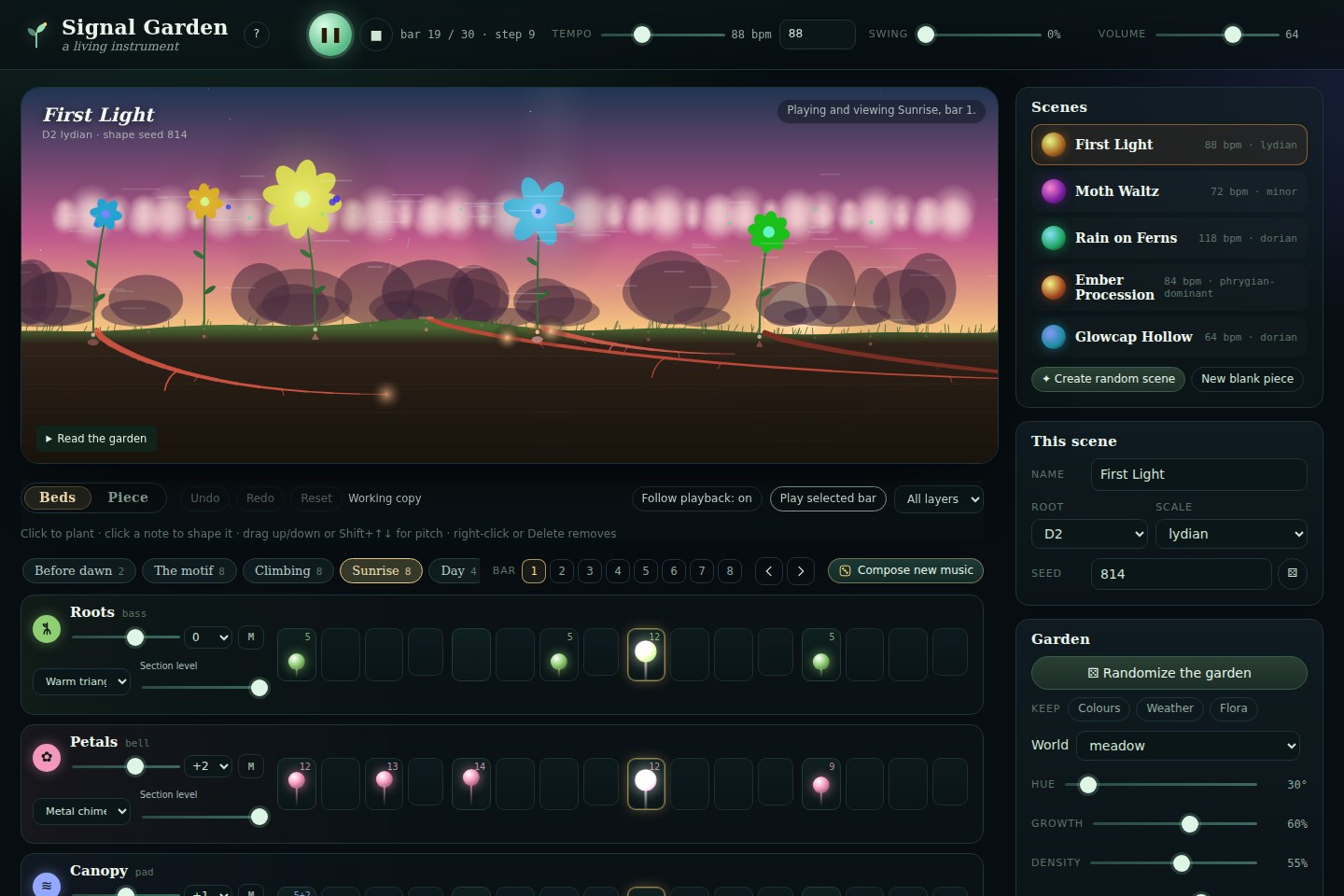
Make a musical arrangement visible without replacing composition with a decorative visualizer. Four instrument beds become layers of a living garden. Horizontal position follows time, height follows pitch, and phrasing and level affect the shapes. The score remains readable while playback is paused.
An instrument with memory
The editor supports sections, repeated bars, chords, velocity, note length, meter and instrument choices. A seeded composer develops motifs into complete arrangements. Separate visual controls change the scenery while preserving the music.
Live playback and offline WAV export share synthesis and event rules. Portable JSON, independent working drafts, migration, undo/redo and explicit storage warnings treat a composition as work worth keeping. The responsive layout preserves the garden while tools move into a dock or drawer on smaller screens.
The collaboration
Codex led the sequencer, synthesis and export; Claude Code built the visual world, interface and authored pieces. Their shared boundary was the score: one representation had to drive sound, editing, animation and saved files consistently. Automated audio and interaction checks support that contract, while musical taste still requires listening.
Limitations
- No MIDI, microphone recording, plugin hosting or cloud synchronization.
- Background playback depends on browser behavior; automated checks cannot establish musical quality.
Source code & evidence
Results reflect the linked evidence snapshots. Source artifacts retain their dates and experimental conditions.